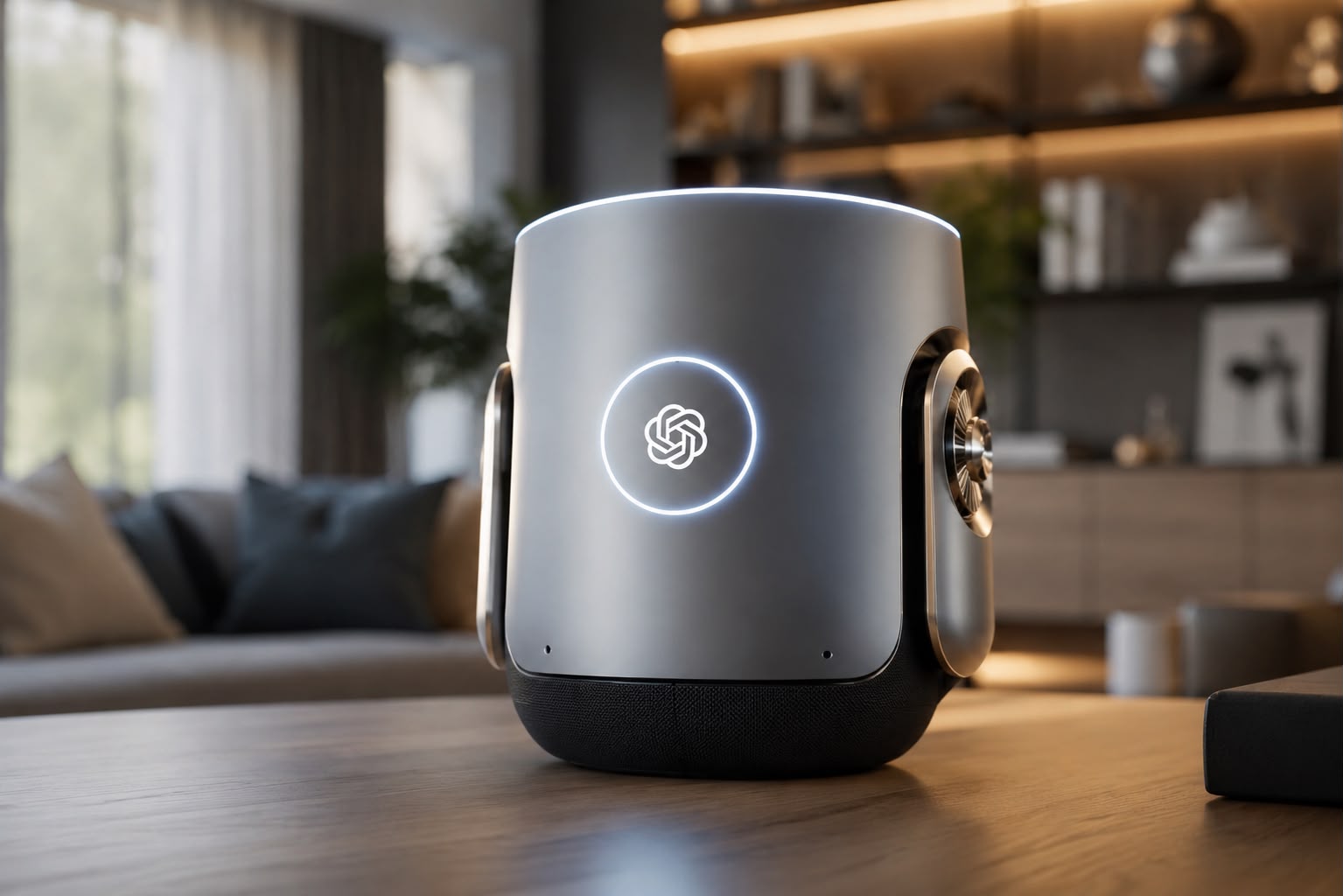
OpenAI Could Be Entering the Hardware Business
OpenAI is best known for building powerful AI models like ChatGPT.
But according to a recent Bloomberg report, the company is now working on something entirely different—its first consumer hardware device.
Unlike traditional smart speakers or AI assistants, this product is reportedly being designed as a screenless mobile AI companion rather than just another smart home gadget.
While OpenAI hasn't officially announced the product, the report offers an interesting glimpse into what could become one of the company's biggest moves beyond software.
More Than Just Another Smart Speaker
At first glance, it might sound like another voice assistant.
But reports suggest OpenAI is aiming for something much more ambitious.
Instead of creating a device that simply answers questions or plays music, the goal is reportedly to build an AI companion that feels like a natural extension of ChatGPT—something that interacts with users in a more personal and conversational way.
Rather than focusing on a display, the emphasis appears to be on voice, intelligence, and natural interaction.
A Screen-Free Design With an Unusual Twist
One of the most interesting details from the report is that the device may not include a screen at all.
That immediately sets it apart from products like smart displays and AI-powered tablets.
Even more interesting is the suggestion that the device could include mechanical elements allowing it to move or reposition itself, making interactions feel more dynamic than with a traditional stationary speaker.
While exact details remain unknown, the reported concept points toward an AI device designed to feel more present and interactive inside the home.
A More Personal AI Experience
Another reported goal is personalization.
According to the report, the device is expected to gradually learn more about its owner over time, allowing it to deliver increasingly personalized assistance.
That could include helping manage everyday tasks, understanding routines, and providing context-aware support throughout the day.
Some reports also suggest the device may integrate deeply with parts of a user's digital life—such as email and other personal information—to provide more useful assistance.
If such capabilities become part of the final product, privacy controls and user permissions will likely become one of the most important aspects of the device.
Former Apple Talent Is Reportedly Involved
The project has attracted even more attention because several former Apple engineers are reportedly involved in developing the new hardware.
Many of these engineers previously worked on some of Apple's most iconic consumer products, bringing significant hardware experience to the project.
This has naturally increased industry curiosity about what OpenAI's first physical product could eventually look like.
The Apple Lawsuit Adds Another Layer to the Story
The timing is particularly interesting.
Apple recently filed a lawsuit against OpenAI, alleging the misuse of trade secrets related to hardware development.
OpenAI has denied those allegations.
It's important to note that these remain legal claims that have not been proven in court, and the case is still ongoing.
Regardless of the outcome, the dispute highlights how competitive the emerging AI hardware market has become.
AI Hardware Is Becoming the Next Big Battleground
For years, AI companies competed mainly through software and language models.
That is now beginning to change.
Increasingly, companies are exploring dedicated AI hardware designed specifically around intelligent assistants rather than traditional smartphones or computers.
The broader industry appears to believe that the next generation of AI experiences may require entirely new types of devices instead of simply adding AI features to existing products.
What Could This Mean for Consumers?
If OpenAI's reported vision becomes reality, AI assistants could evolve beyond apps running on phones.
Instead, users might interact with dedicated AI companions that are:
- 🎙️ Voice-first instead of screen-first
- 🤖 More conversational and context-aware
- 🏠 Designed to assist throughout the home
- 🧠 Personalized around individual users
- 🔄 Continuously learning user preferences over time
Of course, many questions remain unanswered, including pricing, launch timeline, privacy safeguards, battery life, and exactly how the device will work in everyday situations.
Final Thoughts
While OpenAI has yet to officially unveil its first hardware product, the reports suggest the company is thinking far beyond traditional smart speakers.
A screenless AI companion that prioritizes natural conversation, personalization, and everyday assistance would represent a very different direction for consumer AI hardware.
Whether this vision ultimately succeeds will depend not only on the technology itself, but also on how well OpenAI addresses privacy, trust, and real-world usefulness.
One thing is becoming increasingly clear:
The next major AI competition may not be fought only through software models—it could be shaped by the devices we interact with every day.
Official Resources
- OpenAI: https://openai.com
- Bloomberg: https://www.bloomberg.com
