Python in the AI Era: Why the "Glue Language" is More Indispensable Than Ever
The artificial intelligence revolution is transforming how we write code.
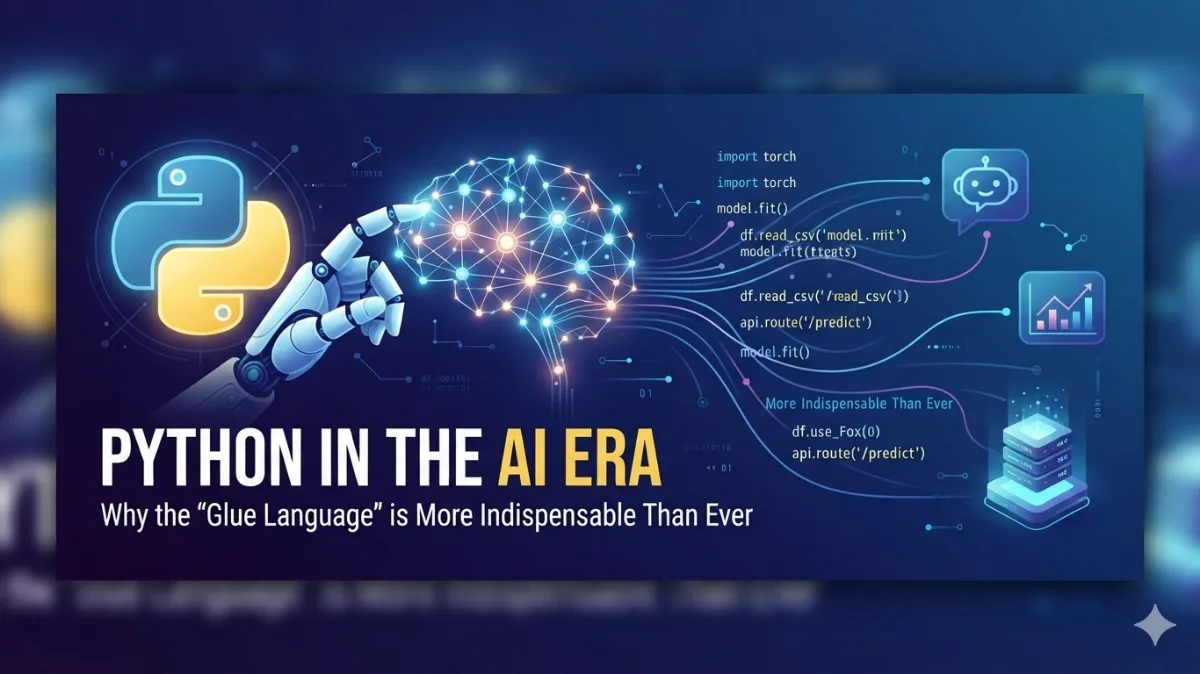
The artificial intelligence revolution is transforming how we write code. With advanced AI assistants capable of generating complex blocks of software in seconds, an existential question has surfaced in the developer community: Is learning and using Python still relevant in today's AI era?
The short answer is yes. In fact, Python has solidified its status as the foundational backbone of the modern AI ecosystem. While AI can write code across many languages, Python remains the primary language for building, orchestrating, and interacting with AI systems.
Here is a look at why Python is more useful than ever in today’s AI-driven landscape.
1. The Undisputed King of AI Frameworks and Ecosystems
Python’s greatest strength is not just its syntax, but its massive open-source ecosystem, boasting over 800,000 packages on PyPI. The entire modern AI and machine learning architecture is built around Python-first tools:
- Deep Learning & LLMs: Industry-standard frameworks like PyTorch and TensorFlow are built natively for Python.
- Generative AI Orchestration: When developers build applications using Large Language Models (LLMs), they rely on Python-centric toolkits like LangChain or LlamaIndex to manage prompts, construct memory vectors, and handle Agentic workflows.
- Data Manipulation: AI requires massive data preprocessing. Libraries like NumPy and Pandas handle high-density mathematical matrices and data manipulation seamlessly.
While the underlying heavy lifting of these libraries is often written in high-performance C++ or CUDA for speed, Python acts as the friendly, accessible interface. It allows researchers to write clean logic while the complex machine-level computation runs blazing fast underneath.
2. The Ideal "Glue Language" for AI Pipelines
AI models rarely operate in a vacuum. A modern AI application requires connecting a user interface, a backend server, vector databases, and external LLM APIs together.
Python excels as a "glue language." Because of its seamless integration capabilities, developers can quickly write Python scripts using micro-frameworks like FastAPI or Flask to spin up APIs that bridge the gap between complex AI models and user-facing applications. It streamlines the entire pipeline from raw data ingest to final output.
3. Shift from Code Builders to AI Editors
A common misconception is that because AI assistants can generate code, human programmers aren’t needed. In reality, the role of a Python developer has evolved. Instead of spending hours writing boilerplate code, engineers are shifting into roles as system architects, code reviewers, and editors.
However, you cannot effectively audit or debug AI-generated code if you don't understand the underlying logic. Studies show that a notable portion of AI-generated code contains security vulnerabilities or bugs. Python’s highly readable, human-like syntax makes it the easiest language for engineers to quickly review, debug, and verify AI-generated suggestions, ensuring safety and architectural integrity.
4. Rapid Prototyping in an Era of High-Speed Innovation
In today's tech market, speed-to-market is everything. Companies are racing to deploy AI features before their competitors.
Python’s minimal setup and rapid execution cycles allow developers to test an idea, build a prototype, and iterate in a fraction of the time it would take in static, verbose languages. Front-end toolkits like Streamlit mean a data scientist can turn a Python-based AI model into a fully interactive web app dashboard within an afternoon.
The Verdict: Python's Future is Secure
Far from fading away, Python is thriving. It continues to hold top positions in global language rankings like the TIOBE Index, largely driven by the unrelenting demand for data science and AI applications.
AI tools are taking care of the tedious repetition, leaving human developers free to focus on solving high-level business problems, designing clever AI prompts, and structuring scalable systems. If you want to build the future of intelligent systems, Python remains your most powerful tool.
Key Architectural Takeaway: Public, keyless AI infrastructure serves as an agile catalyst during early product discovery—eliminating administrative credentials and allowing engineers to validate features, mock dynamic states, and test responsive UI boundaries with zero friction.
On This Page

Subscribe to One2Tech Insights
Stay updated with our latest development and tech guides.
More from AI Careers
View all
How to Turn Your Android Phone into a Local Shared Drive Using Wi-Fi Hotspot
You can turn your Android phone into a local file-sharing server and access a specific folder from Windows, Mac, or other phones connected to its Wi-Fi hotspot.
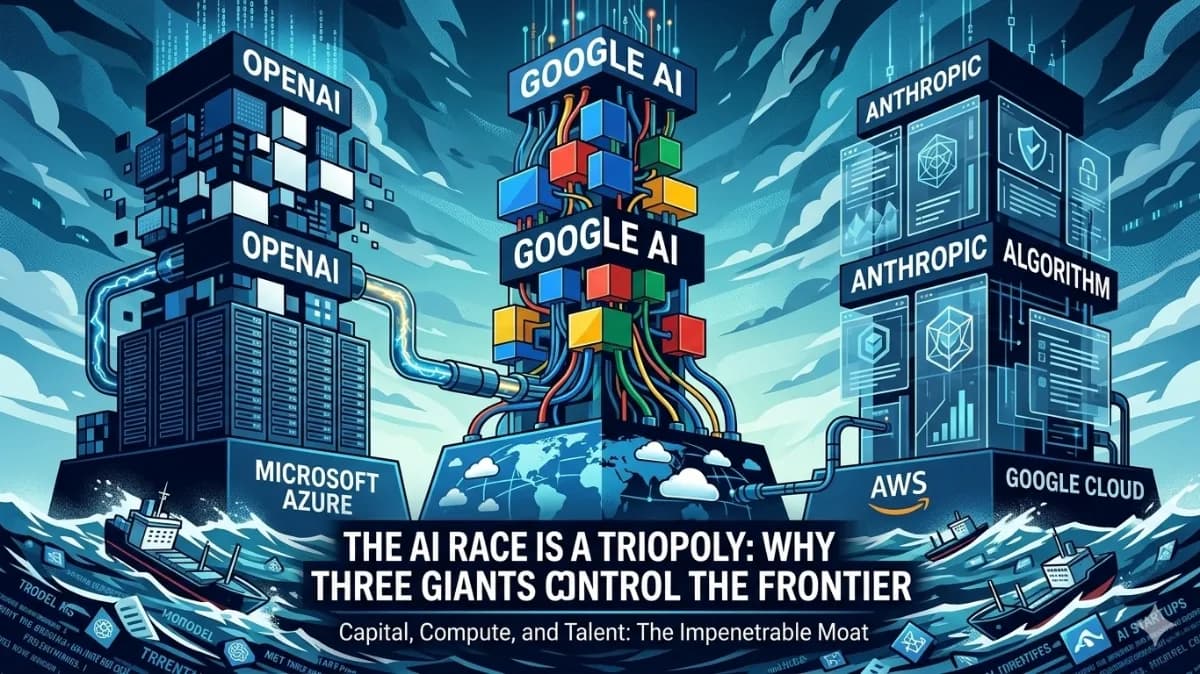
The AI Triopoly: Unpacking the Dominance of Google, OpenAI, and Anthropic
The global AI landscape appears vast, but beneath the surface, a triopoly of Google, OpenAI, and Anthropic controls nearly 90% of frontier AI capabilities. This trio has built an impenetrable moat around the future of technology, making it mathematically improbable for new entrants to break in. In this article, we'll delve into the data-driven breakdown of how these three players established their structural monopoly and why it's so difficult to disrupt.