Supabase October 2026 Update: New Developer Tools, Turso Acquisition, AI Integrations, and More
Supabase's October 2026 update highlights new developer tools, the acquisition of Turso, AI integrations, and more, showcasing the evolving developer ecosystem.
Supabase October 2026 Update: New Developer Tools, Turso Acquisition, AI Integrations, and More
The world of application development continues to evolve, and Supabase is working to make it easier for developers to build, manage, and scale modern applications.
In its October 2026 update, Supabase highlights several developments across its ecosystem, including new developer tools, improvements to its database platform, AI integrations, community projects, and an important announcement about Turso.
Whether you are a beginner building your first application, an independent developer working on a startup, or an experienced engineer managing production systems, these updates offer plenty to explore.
Let's take a closer look at the major announcements.
- Build Anything with Supabase: From Code to MCP Servers
Supabase continues to expand the ways developers can build applications using its platform.
The update highlights the ability to build more than traditional web applications. Developers can work with code, connect AI-powered tools, and explore MCP server integrations to create more capable development workflows.
Supabase provides essential backend services, including:
- PostgreSQL Database: Store and manage structured application data.
- Authentication: Manage user sign-ups, logins, and identity.
- Storage: Store images, documents, and other files.
- Realtime: Build applications that respond to database changes.
- Edge Functions: Run server-side logic without maintaining a traditional server for every task.
- AI and MCP integrations: Connect supported tools and workflows to application data and development capabilities.
For developers building SaaS platforms, dashboards, mobile apps, or AI-powered products, these capabilities can reduce the amount of backend infrastructure they need to manage themselves.
The broader goal is simple: give developers the tools to move from an idea to a working application with fewer obstacles.
- Operate with Confidence: Better Tools for Managing Applications
Building an application is only one part of the development process. Keeping it reliable, understanding its performance, and troubleshooting problems are equally important.
The October update highlights improvements and resources focused on operating applications more confidently.
Developers need visibility into areas such as database performance, application activity, errors, and resource consumption. Better operational tools help them understand what is happening behind the scenes and respond when something goes wrong.
This becomes especially important when an application grows from a small personal project into a production service with real users.
For developers, the lesson is clear: scalability is not just about adding more resources. It is also about having the right tools to monitor, understand, and maintain the system.
- Scale Without Limits: Multigres, OrioleDB, and dbarena
Database performance and scalability remain essential topics for modern applications.
The update highlights three projects and technologies worth watching: Multigres, OrioleDB, and dbarena.
Multigres
Multigres focuses on scaling PostgreSQL across multiple database instances. It is relevant to applications that need to handle growing workloads while maintaining a PostgreSQL-based architecture.
OrioleDB
OrioleDB is a PostgreSQL storage-engine project designed to explore improvements in database performance and efficiency.
Storage architecture can influence how databases handle concurrent workloads, process transactions, and use system resources.
dbarena
dbarena is another database-related project featured in the update. It brings attention to the broader ecosystem of tools and approaches that developers can explore when designing and evaluating database infrastructure.
Together, these projects demonstrate the continuing innovation happening around PostgreSQL.
Why does this matter?
PostgreSQL has become a popular foundation for modern applications. As workloads grow, developers need more ways to improve performance, manage infrastructure, and support demanding applications without abandoning the technologies they already understand.
- Supabase Is Acquiring Turso
One of the biggest announcements in the update is Supabase's acquisition of Turso.
Turso is known for its work around SQLite-compatible databases and database infrastructure, including libSQL.
SQLite is widely used because it is lightweight, portable, and easy to embed in applications. These characteristics make SQLite-based technologies particularly interesting for applications that need local data storage or distributed data workflows.
The acquisition is a notable development because it brings together two companies working on different but complementary areas of the database ecosystem.
Supabase is strongly associated with managed PostgreSQL and backend infrastructure, while Turso has focused on SQLite-related database technology.
The announcement raises interesting possibilities for developers building applications that require flexible data architectures.
However, the acquisition announcement alone should not be interpreted as confirmation that every Turso capability is already integrated into Supabase. Developers should consult official announcements and product documentation for details about integration plans, availability, and migration options.
- Quick Product Announcements
The update also includes several product-related announcements that may affect how developers use Supabase.
Supabase and Gemini Enterprise
The newsletter announces Supabase as a connector in Gemini Enterprise.
This is an important development for teams exploring AI-assisted workflows. Connectors can help supported AI environments work with external services and information sources.
The exact capabilities depend on the integration, permissions, and supported operations, so developers should review the relevant documentation before designing workflows around it.
Changes to Log Pricing
The update also discusses a move toward usage-based log pricing.
According to the newsletter, more than 90% of projects are expected to see no changes until early 2027.
For developers and teams managing multiple projects, logging costs are worth monitoring because application activity can increase significantly as a product grows.
A few useful practices include:
- Review logging and observability usage regularly.
- Avoid generating unnecessary logs in production.
- Keep useful error and diagnostic information.
- Monitor billing announcements and usage dashboards.
- Understand which resources are included in your current plan.
Pricing changes should always be checked against the latest official pricing documentation and the terms applicable to your project.
- Made with Supabase: Projects Worth Exploring
One of the most inspiring parts of the update is the collection of projects built with Supabase.
These projects demonstrate how developers can use backend infrastructure to create products across different categories.
EWA OS
The newsletter features EWA OS, an open-source double-entry accounting project.
Double-entry accounting is a system in which financial transactions are recorded through corresponding debit and credit entries. It is widely used to maintain consistent financial records.
An open-source accounting project can be useful for developers interested in financial software, bookkeeping workflows, and business applications.
Atomic CRM
Atomic CRM is featured as another project in the Supabase ecosystem.
Customer relationship management software helps businesses organize customer information, track interactions, and manage sales-related workflows.
Projects like this can provide useful inspiration for developers building their own CRM systems, internal dashboards, or business management tools.
Supabucket
Supabucket is also highlighted in the newsletter.
It represents another example of developers exploring tools and products around the Supabase ecosystem.
NO-SU
The newsletter also mentions NO-SU, described as a privacy-focused tool involving browser-based, end-to-end-encrypted notes and networked file sharing.
Privacy-oriented tools are particularly interesting because they require careful consideration of authentication, encryption, access control, and how data moves between devices.
As with any security-sensitive application, users should examine the project's documentation and security claims before relying on it for confidential information.
These examples show that Supabase is not limited to one category of application. Developers can use it as part of many different product architectures.
- Community Highlights: Learn from Other Developers
The Supabase community continues to share tutorials, experiments, and practical development ideas.
The October update highlights several topics worth exploring.
Launching a Dating App from Zero
A community resource explores how to approach launching a dating application from scratch.
A project like this can involve user authentication, profiles, matching logic, image uploads, messaging, and privacy controls.
It is also a useful reminder that building a successful application involves more than choosing a backend. Developers must consider user experience, moderation, security, and the overall product strategy.
Supabase MCP for Developers
The update also highlights MCP-related development resources.
MCP, or Model Context Protocol, provides a standardized way for compatible AI applications to connect with external tools and data sources.
When used appropriately, these integrations can help developers experiment with AI-assisted workflows involving databases and other development services.
Permissions and access controls remain essential. AI integrations should only receive the access required for their intended tasks.
Supabase as a Data Platform
Another highlighted topic explores the idea of Supabase becoming a broader data platform.
This reflects a wider industry trend: developers increasingly want databases, authentication, storage, application logic, and related infrastructure to work together.
An integrated platform can simplify development, although the right architecture still depends on the project's requirements, scale, budget, and operational needs.
Authentication with Row-Level Security
The community section also highlights the relationship between Supabase authentication and PostgreSQL Row-Level Security (RLS).
RLS allows developers to define which rows a database user or request is permitted to access.
For example, in a project management application, a developer might create a policy that allows users to access only the projects they belong to.
Authentication establishes identity; authorization determines what that identity can do. Both are essential.
Developers should carefully test their policies and avoid relying on frontend restrictions alone to protect sensitive data.
Multiplayer Browser Games
The update also points to community work involving multiplayer browser games.
Realtime communication and database-backed state can help developers experiment with interactive applications, collaborative tools, and multiplayer experiences.
These projects are useful reminders that backend platforms can support creative applications beyond conventional business software.
- Supabase Is Hiring
The newsletter also includes a hiring announcement and points readers toward opportunities within the Supabase team.
For developers interested in contributing to an open-source-oriented technology company, career opportunities can be worth exploring.
The update references roles and opportunities across areas such as ecosystem development, developer relations, and related functions.
If you are interested in working with Supabase, check its official careers page for current openings, job requirements, and application details.
- The Community Side of Supabase
The newsletter closes with a lighter community moment: a playful section titled "Baking hot meme zone."
Although memes are not technical documentation, they are a familiar part of developer culture.
They provide a way for engineers to share the frustrations, unexpected bugs, and funny moments that come with building software.
A strong developer ecosystem is not just about code and documentation. It also benefits from community participation, shared experiences, open-source contributions, and conversations between people solving similar problems.
- What These Updates Mean for Developers
The October 2026 update highlights several broader trends across modern software development.
First, integrated backend platforms are becoming increasingly useful. Developers want databases, authentication, storage, and application logic to work together without requiring them to manage every infrastructure component independently.
Second, PostgreSQL remains an important foundation. Projects such as Multigres and OrioleDB illustrate the ongoing work to improve the scalability and performance of PostgreSQL-based systems.
Third, AI is becoming part of developer workflows. Integrations involving AI tools and MCP create new possibilities for connecting software services, although secure permissions and careful implementation remain essential.
Fourth, open-source projects continue to inspire new products. Applications involving accounting, CRM, privacy, and multiplayer experiences demonstrate the variety of products developers can build with modern backend tools.
Finally, database infrastructure continues to evolve. Supabase's announced acquisition of Turso is a development worth following as more details about its implications become available.
Conclusion
Supabase's October 2026 update offers a useful snapshot of a rapidly evolving developer ecosystem.
From the announced Turso acquisition and Gemini Enterprise connector to database projects, community-built applications, and educational resources, the newsletter covers several areas that matter to modern developers.
For beginners, these announcements provide ideas for projects and technologies to learn. For experienced engineers, they offer opportunities to evaluate database architectures, AI integrations, and application infrastructure.
The most important takeaway is that building software is becoming increasingly accessible, but successful applications still depend on good architecture, secure implementation, thoughtful product decisions, and continuous learning.
If you are building your next web application, mobile app, SaaS product, or AI-powered tool, the Supabase ecosystem is worth exploring.
What do you think about Supabase's acquisition of Turso and the growing role of AI in application development? Share your thoughts and join the conversation.
Editorial note: This article is based on the Supabase October 2026 newsletter shown in the supplied screenshot. For current feature availability, acquisition integration details, pricing, and job openings, consult the official Supabase and Turso resources.

Subscribe to One2Tech Insights
Stay updated with our latest development and tech guides.
More from AI Careers
View all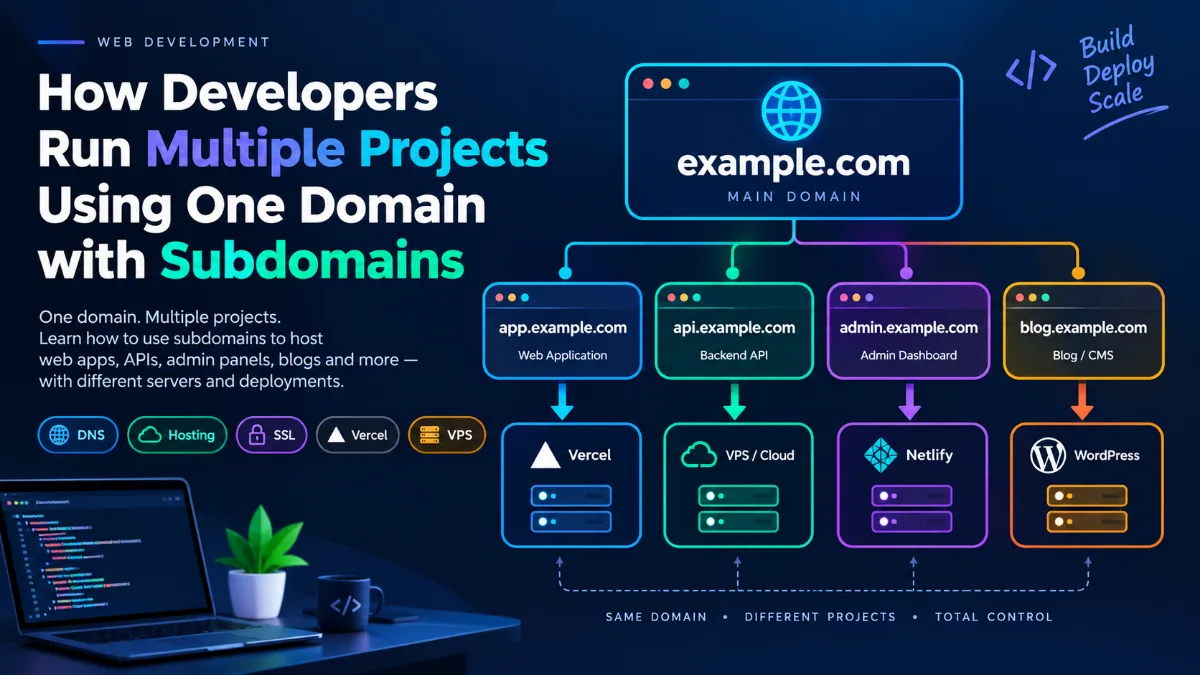
How Developers Run Multiple Projects Using One Domain with Subdomains
How Developers Run Multiple Projects Using One Domain with Subdomains If you are a developer managing multiple websites, applications, APIs, dashboards.
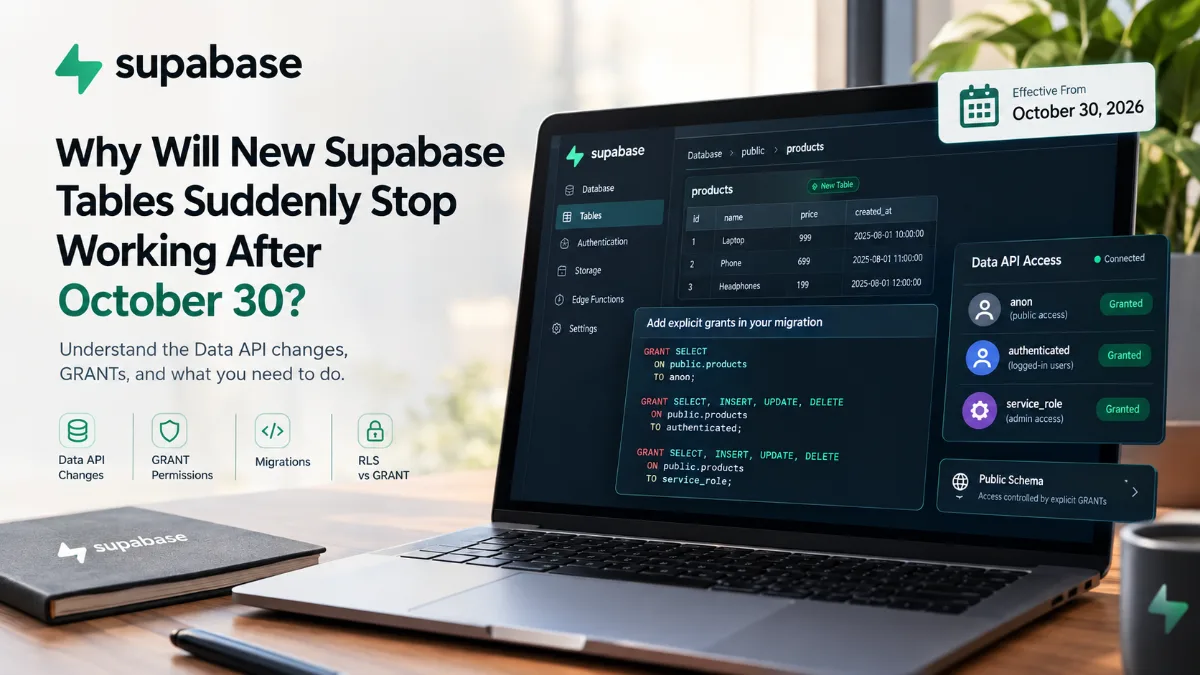
Supabase में 30 अक्टूबर के बाद नई Tables अचानक काम क्यों नहीं करेंगी?
30 अक्टूबर 2026 से Supabase के existing projects में public schema की नई tables Data API से automatically accessible नहीं होंगी। जानिए GRANT, RLS, migrations और existing tables पर इसका क्या असर होगा।